
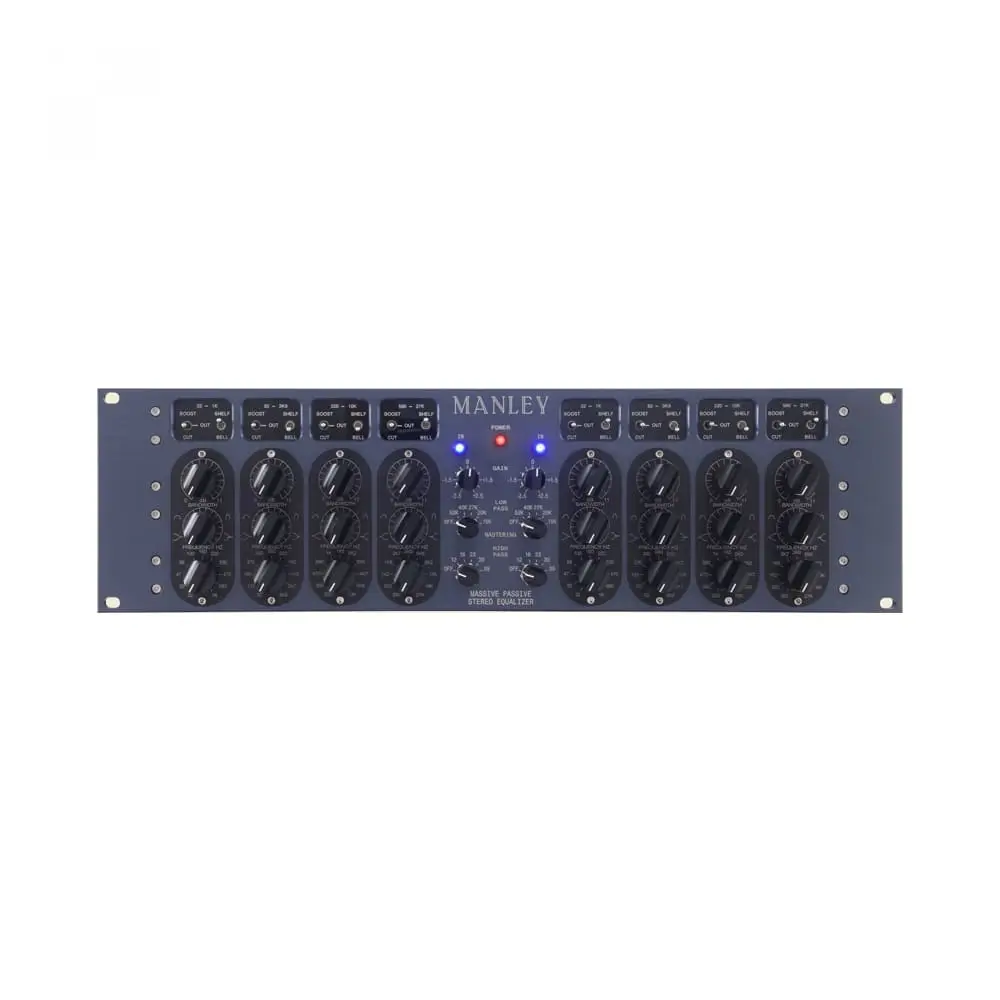



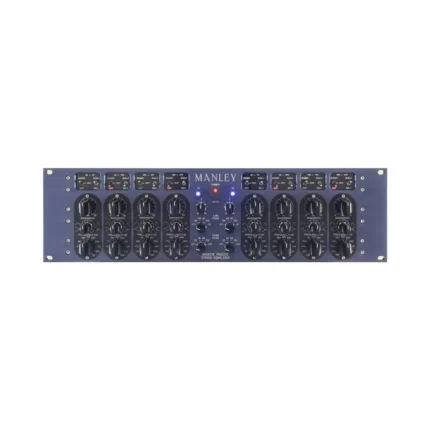
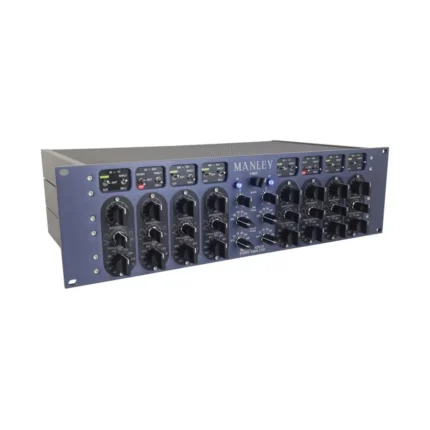
Manley Massive Passive Mastering Version
29,995.00 Excl. VAT
- All-Passive tone sculpting circuitry
- Unique Shelf curves use the “bandwidth” control
- Overlapping and Interleaved Frequency choices
- Every band switchable to shelf or bell
- Vacuum tube make-up gain and line drivers
- Parallel symmetrical topology
- Premium components throughout
Available on backorder
Massive Passive Mastering Version
WE CAME UP WITH A CLEVER WAY TO PULL THIS OFF…
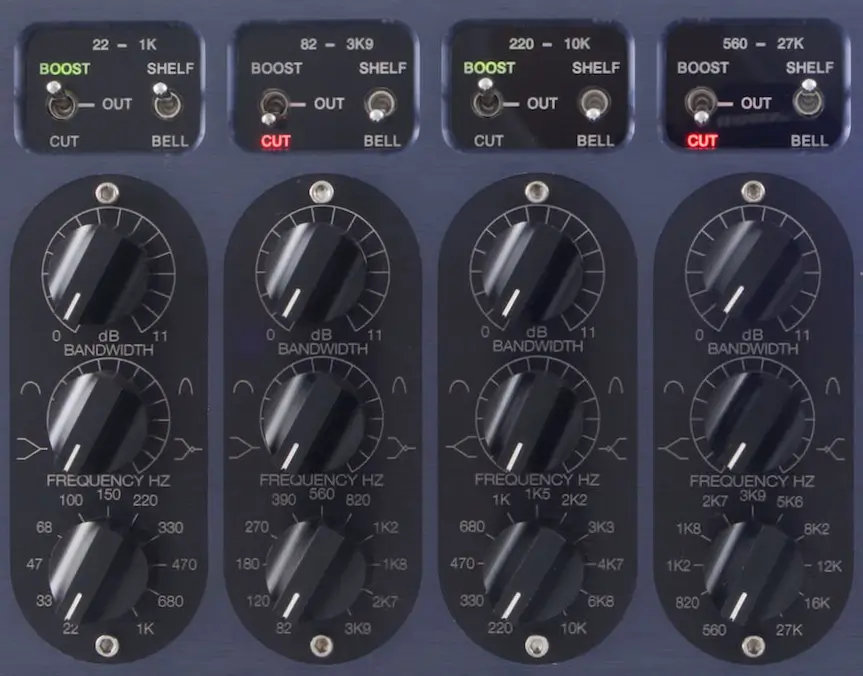
…WITHOUT breaking your bank account, thanks to these interesting mechanically detented knobs for the GAIN and BANDWIDTH controls! These knobs are of our own design. They are a clever two-part metal design using a ball and spring detent system. They ensure repeatability and a good, positive feel, without the incredible cost and space problems tons of Grayhill switches would have caused.

Some notes pertinent to the Mastering Version:
The Massive Passive is a passive design and not a “true parametric”. A true parametric implies non-interacting controls. In the Massive Passive, the “GAIN” and “BANDWIDTH” controls DO interact (on purpose). We cannot create a “GAIN” switch that is set up for “consistent” 1/2 dB steps. When you change the “BANDWIDTH” the step size must and will change. On the regular version, you get a full 20dB boost or cut only when: the bandwidth is fully clockwise (narrow) in bell mode or fully counter-clockwise in shelf mode. Here on the Mastering Version, this maximum boost or cut is 11dB. Conversely at the widest bell, the maximum boost or cut is 6dB and the narrowest shelf maxes out at 12 dB. A similar situation is also true for the bandwidth detents. So in this new Mastering Version, do not expect a certain dB change per step as it will vary according to where the bandwidth is set. But whatever the step sizes are, they will be repeatably 16 steps. The FREQUENCY select is already detented as it is and always has been a Grayhill switch. It also interacts in shelf mode.
On a similar note, the Massive Passive is a “parallel design” and not the conventional “series design”. This means the bands interact with each other too. It is possible, to set a band to boost 20 dB but if another band is boosting near or at that frequency, very little will happen. On a conventional EQ the two bands “add” and you would be boosting 40 dB into clipping. Because the bands interact, predictable step sizes are unrealistic, however, with the Mastering Version, you will be able to repeat settings (if you log them of course). The price paid for interacting bands, is a better sounding EQ and bizarre looking settings (on purpose).
Unlike virtually every other EQ, the Massive Passive allows much more EQ without sounding “processed”. Where 5 or 6 dB is about all one could attempt with other EQs in mastering, the Massivo amazes engineers with how much EQ they can do and get more “natural” results at the same time. We could have squeezed 11 position Grayhill switches in the modules if we had wanted 1/2 dB steps but then the maximum range would have become only 5.5 dB. Remembering what we stated above, the minimum range would then become about 1.5 dB with approximately 0.2 dB steps. This approach would have essentially thrown away most of the useful range the unit is capable of. Going with these special mechanically detented knobs which use the same pots underneath that the normal Massivo uses, we get nearly all the range of the normal version, but with the repeatability of the detents.
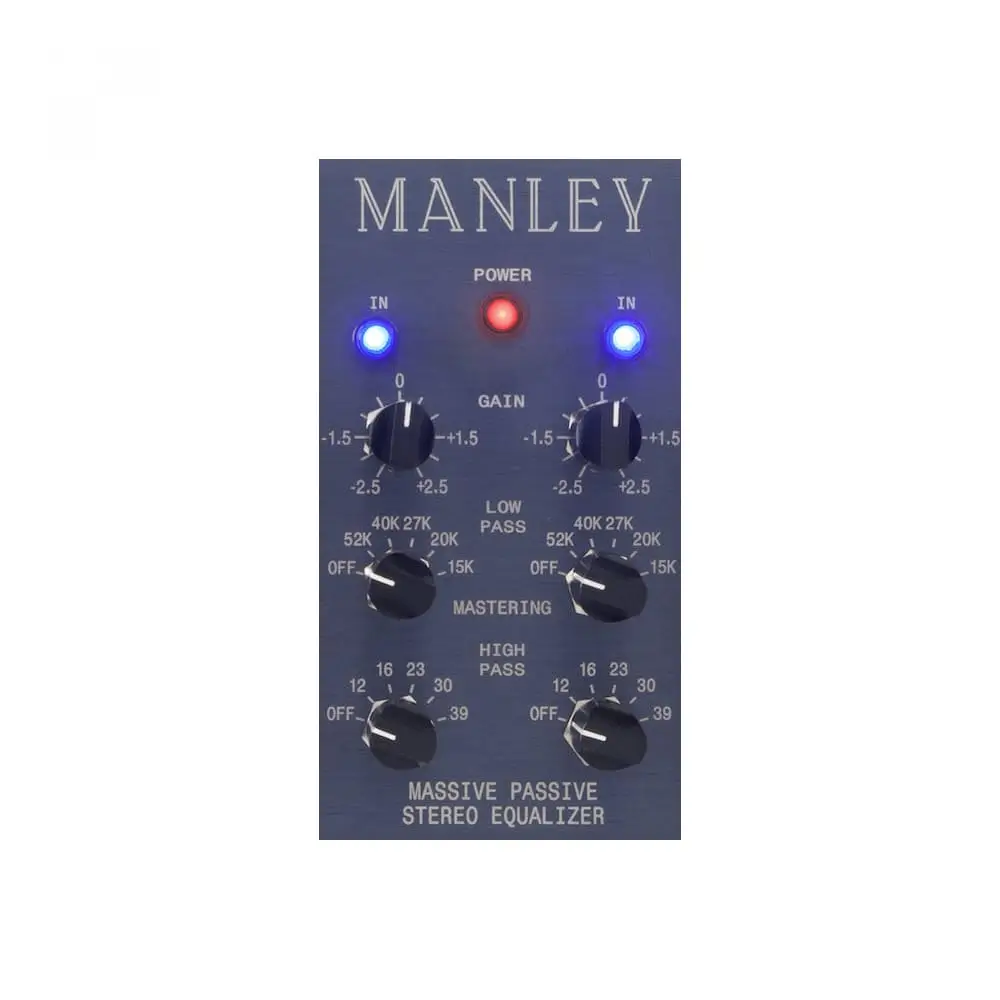
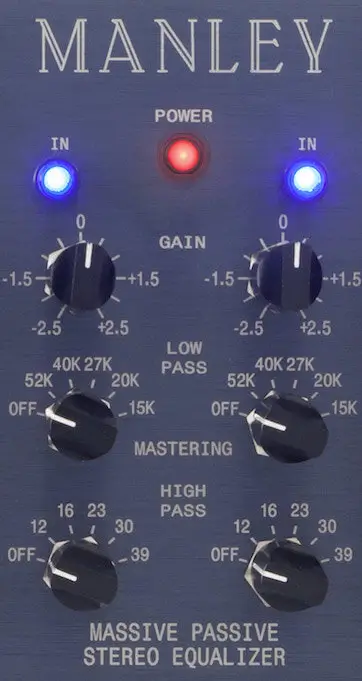
We have also custom tailored the FILTERS in the Mastering Version specifically for Mastering purposes, moving them lower and higher than the normal version, with mastering engineers specifically in mind. The slopes are all 18dB per octave on the mastering filters except for the highest 52kHz Low Pass filter which has a 30 dB/octave slope. If you are looking for drastic effects (like telephone sounds) then get the normal version. These filters are really geared for mastering engineers.
High Pass Filters: OFF, 12, 16, 23, 30, 39 Hz
Low Pass Filters: OFF, 52kHz, 40kHz, 27kHz, 20kHz, 15 kHz
Additionally, the Master Gain Trim controls in the Mastering Version are true 11 position 1/2 dB stepped Grayhill switches set up for a range between -2.5 to +2.5 dB of master gain trim. This allows more confidence in left/right matching and calibration. The gain change voltage divider occurs before the final tube amplifier stag and after all of the passive EQ circuits.
| Weight | 8.91 kg |
|---|---|
| Dimensions | 57.15 × 46.23 × 25.91 cm |
| Frequency Response: | Frequency Response: 8 Hz to 60 kHz ±2 dB |
| Inputs: | 2 x XLR, 2 x 1/4″ |
| Number of Bands: | 4 |
| Number of Channels: | 2-channel, Stereo |
| Outputs: | 2 x XLR, 2 x 1/4″ |
| Power Supply | 72 W @ 120 VAC, 60 Hz |
| Rack Spaces: | 3U |
| Maximum Output Level | Maximum Output: @ 1.5% THD +37 dBv; +26 dBv @ 20 Hz |
| Tubes per Side | 2 x 12AU7, 4 x 6414 |
| Dynamic Range | 120 dB |
| Bypass | Hardwire Bypass Switch: Unit does not pass audio when powered off |
| Tube Type | 2 x 12AU7 4 x 6414 |
Related products
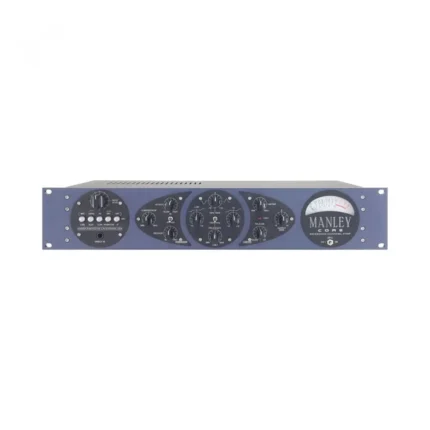
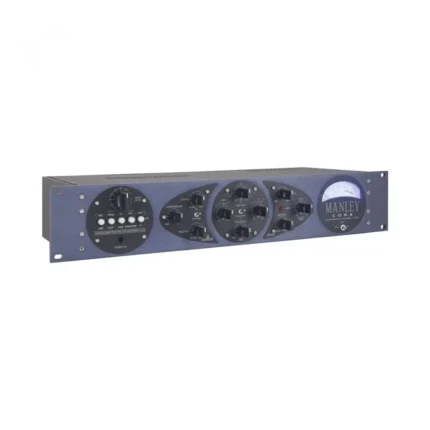
Manley Core Reference Tube Channel Strip
- ALL-TUBE preamplifier audio path using 1 x 12AX7 for gain and 1 x 6922 White Follower
- Balanced Transformer Coupled XLR Microphone Input Impedance: 1200 Ohms
- Balanced XLR Line Input Impedance: 10 kOhms
- Unbalanced 1/4" Direct Input Impedance: 10 Meg Ohm
- Hi-current drive Direct XLR output Impedance: 50 Ohms
- Silent conductive plastic INPUT attenuator
- Microphone preamp high pass filter starting at 120Hz with a 6dB/8va slope
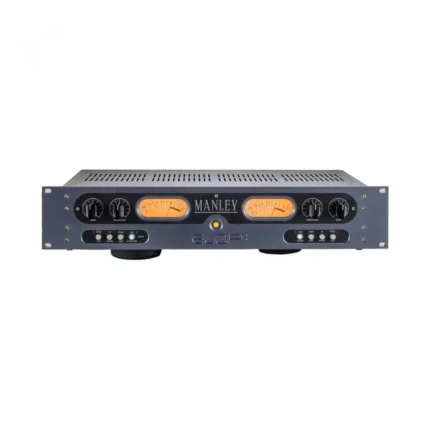
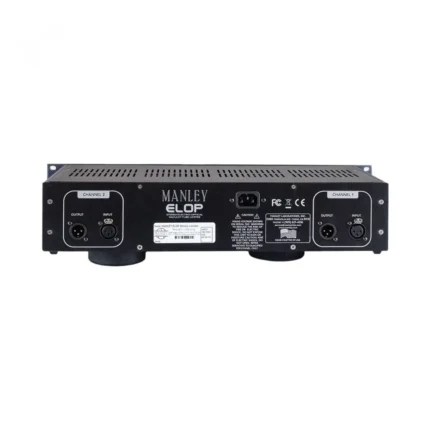
Manley ELOP+ Dual-channel Tube Compressor/Limiter
- 10:1 Limiter and 3:1 Compressor ratios
- All-tube audio path uses 5751 (gain)
- 6922 (White Follower Output) dual triodes each channel
- Balanced Manley IRON® transformer-coupled XLR Inputs
- XLR impedance-balanced outputs
- BYPASS switches and AUTOMUTE with warm-up delay
- Large illuminated VU meters read Gain Reduction or Output levels
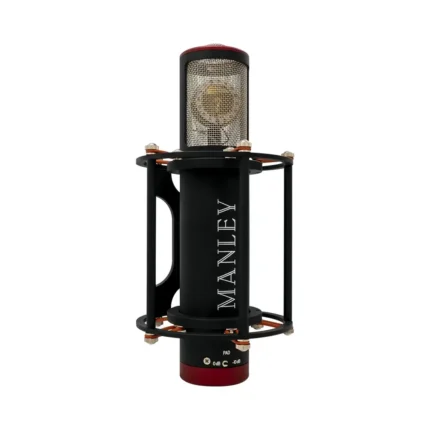
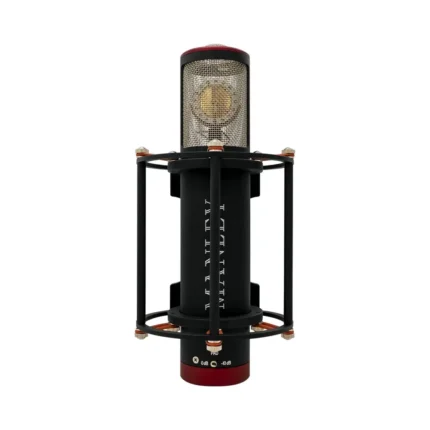
Manley Labs Reference Cardioid Tube Microphone
- All-tube Reference Cardioid Microphone
- Traditional Manley tube circuitry for that larger-than-life sound
- All-tube design with triode 12AT7
- Custom-wound output transformer with nickel laminations and humbucking bi-filar windings
- Switchable 10dB pad tames extra-hot sources
- Highest-quality components used throughout
- External PSU and 20' power supply cable with locking 6-pin connectors
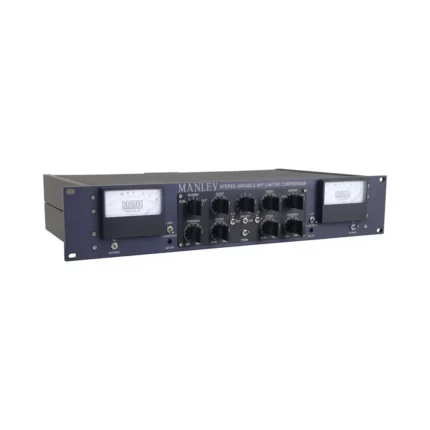
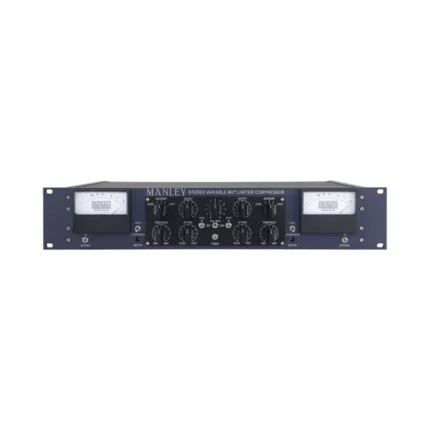
Manley Labs Stereo Variable MU Limiter Compressor
-
Dual-channel Tube Limiter/Compressor with Stereo Link and True Variable Gain
- Manley input and output transformers with pure nickel laminations in mu-metal case
- Flat frequency response from 20Hz–25kHz
- Balanced Inputs and Outputs
- Fully differential all-tube circuitry using one 5751, 7044, and 12AL5 per channel
- Variable Gain vacuum tube (per channel): 5670
- Independently regulated B+ and Heater supplies
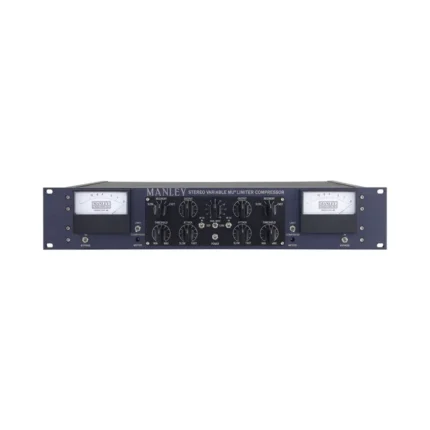
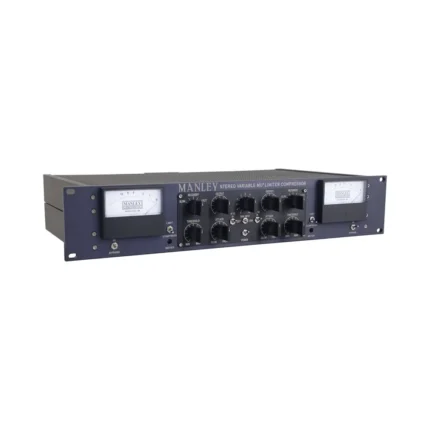
Manley Labs Stereo Variable MU Limiter Compressor Mastering Version
- Dual-channel Tube Limiter/Compressor
- T-Bar Mod, Detented Rotary Switches, and True Variable Gain
- Variable Gain vacuum tube (per channel): 2 x 6BA6 single pentodes
- Rotary switches with detented steps for precise channel matching and settings recall
- Switch steps built with 1% metal film resistors on sealed gold-contact Grayhill switches
- Manley input and output transformers with pure nickel laminations in mu-metal case
- Flat frequency response from 20Hz–25kHz
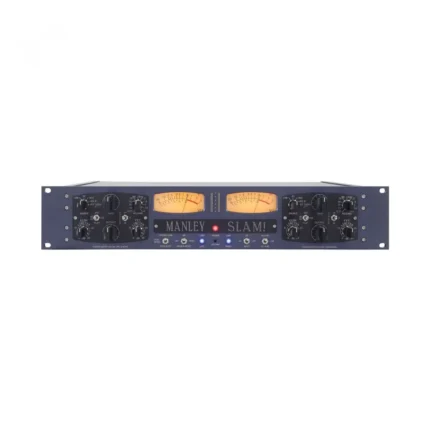
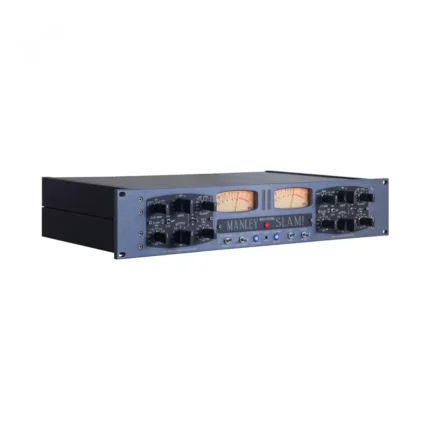
Manley SLAM 2-channel Tube Microphone Preamp & Limiter
- Input Tubes: 2 x 12AT7A NOS GE specially selected by Manley Labs for low noise and stable bias
- Output Tubes: 2 x 6414W NOS USA dual triodes
- I/O: Manley transformer-coupled, Balanced Inputs and Outputs
- Microphon epreamplifier: Selectable 48V phantom power and phase reverse
- Gain: 60dB max Microphone preamplifier, 43dB max DI, 20dB max Limiter Gain
- Input Impedance: 2000 ohms Micpre, 1Meg ohms DI
- FET Limiter: Attack: approx. 100S; Release: 10mS to 2Sec; Ratio: better than 20:1
- ELOP Limiter: Attack: approx. 10mS for 6dB GR; Release: 2.5 Sec; Ratio: 10:1
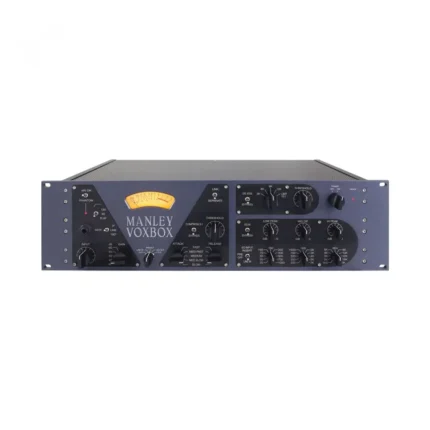
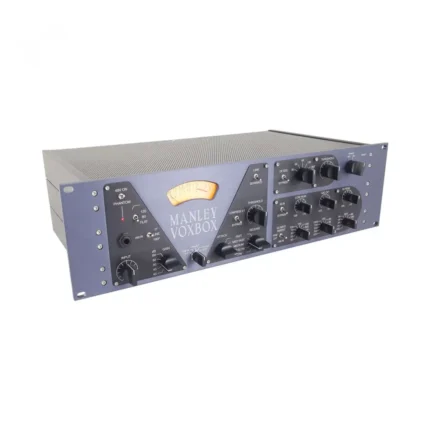
Manley VOXBOX Tube Channel Strip
- Channel Strip with Class A Microphone Preamplifier
- 5 Manley transformers, nickel laminated, mu-metal casings
- 2K ohm Mic input, high-current 48V Phantom power
- Mic preamp gain: 40–60dB
- hi-Z (100k ohm) DI instrument input
- Line and Insert inputs (balanced XLR, 1/4")
- Preamp and EQ outputs (balanced XLR, 1/4")